


Welcome to Your Monday Music Briefing - what caught my attention last week that felt important for self-label artists to know.
Why U.S. Radio Still Doesn’t Pay Artists (And Why That Matters for Your Career)
SoundExchange CEO Michael Huppe testified before Congress last week alongside Gene Simmons, pushing for the American Music Fairness Act, a legislation that would finally require terrestrial AM/FM radio to pay artists and labels for playing recordings. Currently, only songwriters get paid. The U.S. remains the only industrialized country with this gap.
Sono Hikari take: This inequality dates back to copyright laws written before recorded music existed. By the 1970s revision, the National Association of Broadcasters had become too powerful. Politicians need radio airtime to get re-elected, so they sided with broadcasters over artists. When Aretha Franklin’s “Respect” plays on radio, her estate gets nothing. Only Otis Redding’s songwriting earns. Every other industrialized country figured this out decades ago.
For self-label artists: While terrestrial radio remains broken, don’t miss the royalties you can collect right now. Most self-label artists aren’t registered with SoundExchange, which collects digital performance royalties from SiriusXM, Pandora, and internet radio - separate from your distributor and PRO.
Spotify’s New AI Playlists Let You Control the Algorithm—What Does That Mean For Discovery?
Spotify launched “Prompted Playlists” in beta for Premium subscribers in New Zealand. Users write detailed text prompts to generate personalized playlists based on their entire listening history, like “deep cuts from my top artists from the last five years” or “high-energy pop for a 30-minute run.” The feature will evolve before rolling out to other markets. Instagram and Bluesky are making similar moves toward user-controlled algorithms to control what type of reels/content they see.
Sono Hikari take: The algorithm still pulls from what you’ve already listened to, reinforcing existing patterns instead of creating discovery. For emerging artists, you’re now competing with potentially millions of AI-generated playlists that prioritize familiarity over the unknown. It’s more important than ever to build deep and direct fan relationships.
For self-label artists: User-controlled algorithms make initial discovery harder, but once fans find you, this works in your favor. If someone adds you to their custom playlist that refreshes weekly and pulls your deep cuts, that's a dedicated listener - not someone who passively heard you once on Discover Weekly. The barrier to entry is higher, but the fans who clear it stick around. Focus on converting casual listeners into superfans through direct engagement and live shows. Once they're yours, algorithm personalization keeps them connected to your catalog.
SoundCloud and Imogen Heap Are Building A One Stop For Metadata
SoundCloud teamed up with Auracles, a digital identity platform founded by artist Imogen Heap, to help artists manage metadata, stems, press releases, assets, and contact information in one centralized platform. Artists can connect their SoundCloud profiles to Auracles and sync data between platforms. Heap calls it a “sovereign digital ID” for artists to protect and control their work in the digital landscape.
Sono Hikari take: The announcement is vague on specifics, but if Auracles delivers on its promise as one central hub where you input metadata once and it distributes accurately to every platform you release on, including royalty collection systems, that would be a huge win for self-label artists. However, many music tech companies have tried to crack this exact problem, and none have succeeded yet. The metadata ecosystem is fragmented across distributors, PROs, and publishing admins, each requiring separate data entry.
For self-label artists: Don't wait for the perfect platform to fix metadata management for you. Right now, accurate metadata directly impacts your income. Incorrect credits mean royalties go to the wrong people. Unclaimed royalties sit in the "black box" and get distributed to major shareholders - usually major labels- after three years. Messy splits cause payment delays. Missing songwriter info blocks publishing registration. Sync supervisors pass on tracks with unclear ownership. Keep your metadata organized yourself, when the right platform finally arrives, you'll be ready.
YouTube Walks Away from Billboard Charts Over Free vs. Paid Streaming Power Struggle
YouTube announced it will stop providing data to Billboard charts after January 16, 2026, ending a decade-long partnership. The move comes one day after Billboard announced it’s changing its streaming methodology to narrow the gap between paid and ad-supported streams. Currently, 1 album unit equals 1,250 paid streams or 3,750 ad-supported streams (1:3 ratio). Billboard’s new formula tightens this to 1:2.5 (1,000 paid or 2,500 ad-supported). YouTube’s Lyor Cohen says he wants all streams counted equally, regardless of whether they’re paid or ad-supported, arguing “every fan matters and every play should count equally.”
Sono Hikari take: YouTube frames this as fairness, but it’s just another platform war. Here’s the reality: paid streams pay artists 3-5 times more than ad-supported streams, but both rates are exploitative. Under Billboard’s new formula, you need 100,000 paid streams or 250,000 ad-supported streams to equal 100 physical album sales. Think about that disparity. YouTube wants chart credit without paying artists proportionally, while Billboard’s album unit system severely undervalues digital consumption. Neither side is fighting for better artist compensation - they're fighting over marketing power.
For self-label artists: The entire streaming economy is built to benefit the platforms only. It’s still important to focus on revenue streams you can actually control: physical sales, Bandcamp, concert tickets, merch, and email subscribers who’ll support you directly. Build real relationships with fans who’ll pay you fairly for your work.
If You Missed It:
Sombr Case Study: How to A/B Test on TikTok Without Killing Your Art
How to Break Free From Comparison and Create on Your Own Terms
One Thing To Carry With You This Week:
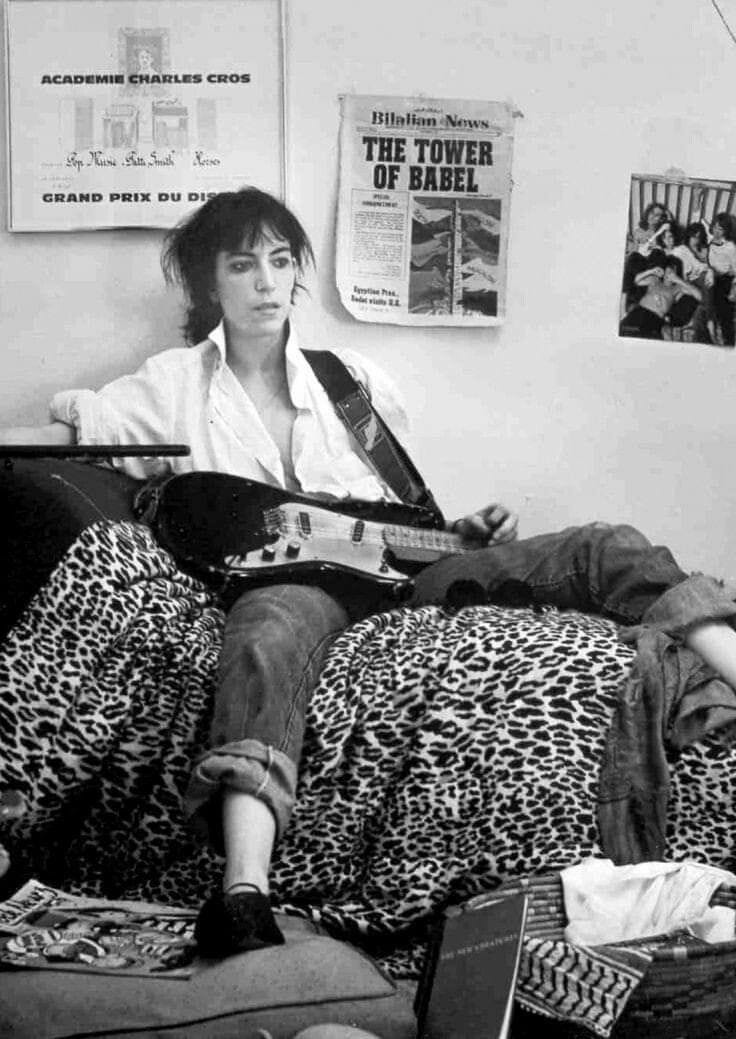
“What tools do we have? What can we count on? You can count on yourself.” — Patti Smith
Leave a comment or respond to this email with your thoughts on these topics!