


Welcome to Your Monday Music Briefing, your weekly roundup of what caught my attention last week that felt important for self-label artists to know.
Apple Music Launches AI Transparency Tags — But Only If Labels and Distributors Declare Them

Apple Music has introduced Transparency Tags, a metadata system that flags when AI has been used to create artwork, tracks, compositions, or music videos. Labels and distributors can apply them now and will be required to for future deliveries. The catch: Apple is relying entirely on self-reporting. There’s no detection technology on their end, and if a tag is omitted, the system assumes no AI was involved.
Compare that to Deezer, which built its own detection infrastructure. Deezer is now receiving over 60,000 fully AI-generated tracks per day, with synthetic content making up roughly 39% of all daily deliveries. They’ve tagged over 13.4 million AI-generated tracks and report that up to 85% of streams on those tracks were fraudulent in 2025.
Sono Hikari Take: Two models are emerging for AI transparency: one that trusts the supply chain to police itself, and one that verifies independently. Apple’s approach matters for good-faith actors, but the people uploading AI content to game royalty pools aren’t going to voluntarily tag their tracks.
Deezer’s detection system, which can identify 100% AI-generated content from tools like Suno and Udio, is the more consequential infrastructure. They’ve already begun licensing it to collecting societies. If detection becomes the industry standard rather than self-reporting, it changes the economics for everyone. That 85% fraud rate on AI-generated streams isn’t a platform problem. It’s money being siphoned from the royalty pools that pay real artists.
For Self-Label Artists: I've recently started including an AI disclosure clause in producer agreements, requiring producers to confirm whether they used AI-generated output from platforms like Suno or Udio. As more producers incorporate these tools into their workflows, this kind of protection matters. You don't want to find out after release that your song has been flagged with an AI tag you didn't know about. Beyond contracts, keep your metadata airtight, your credits accurate, and check what your distributor's AI settings look like. The artists who benefit from transparency frameworks are the ones whose ownership is already documented clearly.
Charlie Puth Named Chief Music Officer at AI Music Company Moises
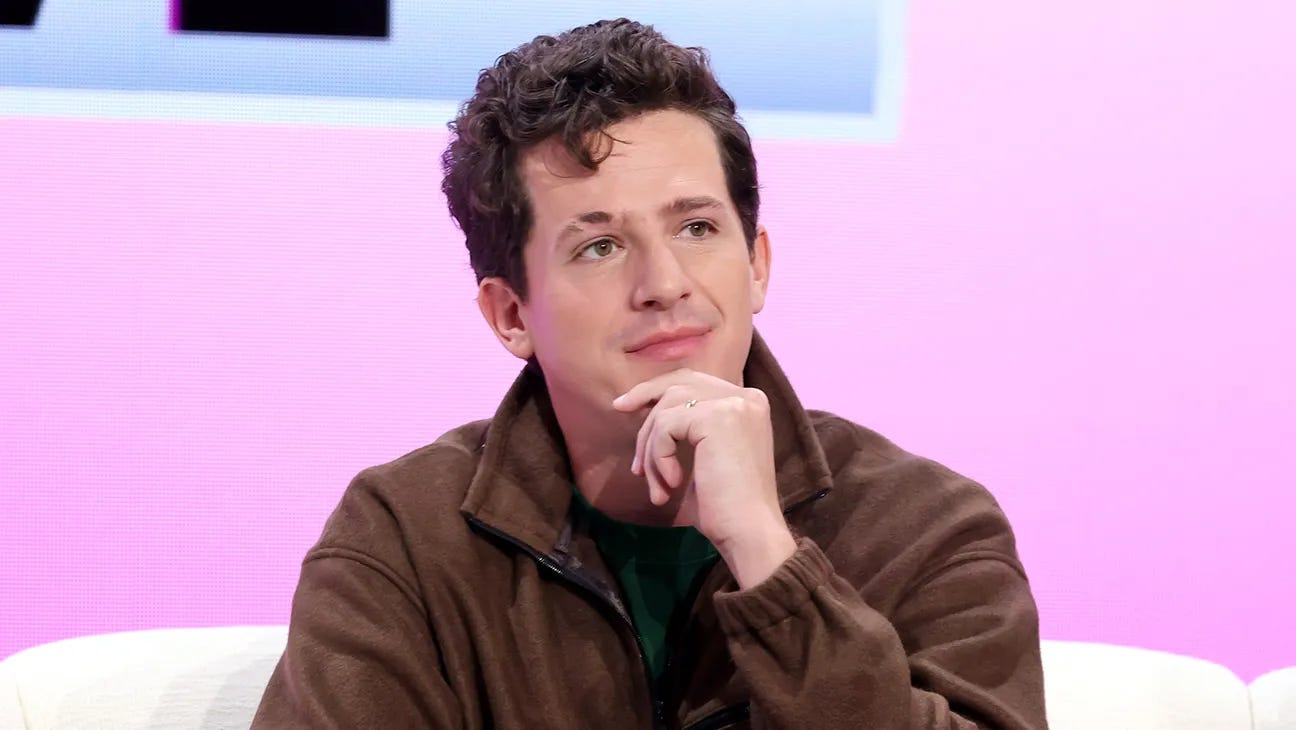
Charlie Puth has been named Chief Music Officer at Moises, an AI platform that offers production tools like vocal isolation and mastering. Unlike Suno and Udio, Moises doesn’t generate music from prompts. It provides non-generative tools designed to speed up the recording process. Puth, who produces and engineers his own music, described AI done right as something that helps artists learn and explore rather than replacing them.
Sono Hikari Take: This distinction gets lost in the broader AI conversation. There’s a real difference between AI that generates music for you and AI that helps you make music better and faster. Moises falls in the second category. Vocal isolation, stem separation, mastering assistance: these are production tools that save time and lower costs, the same way a better plugin does.
Charlie Puth feels like the right person for this role. Beyond his success as a recording artist, he’s built a massive following on TikTok through his “Professor Puth” series, where he breaks down production techniques, music theory, and the craft behind the sounds. He’s someone who genuinely keeps the art of production visible in a generation that’s increasingly exposed to prompt-based output. Having him attached to a tool that enhances the creative process rather than replacing it sends the right message.
For Self-Label Artists: If you’re producing your own music, tools like Moises are worth exploring. Vocal isolation for reference tracks, quick mastering for demos, and stem separation for remixes. These aren’t replacing your process. They’re removing friction from it. The cost of professional-grade production tools continues to drop, and that’s a direct advantage for artists building without a label budget.
South Korea’s Music Industry Unites to Declare ‘War’ on AI Copyright Infringement

Six of South Korea’s major music industry organizations have formed a coalition declaring a “state of emergency” against AI copyright infringement. The coalition includes organizations representing songwriters, performers, labels, and entertainment producers, with council members from HYBE, SM Entertainment, JYP, YG, and the local arms of Sony, Warner, and Universal.
Their demands: a ban on unauthorized AI training without creator consent, mandatory transparency in AI generation, and clear standards for distinguishing human-created work from AI output. They’re also building blockchain-based infrastructure to link ISWC, ISRC, YouTube Content ID, and Korea’s UCI into a unified system for tracking and distributing royalties in real time.
Sono Hikari Take: South Korea is treating AI copyright as an existential issue rather than a policy conversation. When six organizations spanning the entire rights chain form a joint task force and call it a “declaration of war,” that tone will ripple outward.
What makes this more than a public statement is what they’re building behind the demands. Right now, rights data in the music industry is scattered across different organizations and systems that don’t talk to each other. That fragmentation is one of the reasons it’s so hard to track who owns what and make sure the right people get paid. South Korea’s coalition is building a unified system to fix that, and they want it to become the global standard.
They’re also already enforcing stricter rules than anyone in the US. KOMCA, South Korea’s largest music copyright collective, requires creators to certify that AI was not used when registering new works. If they find out otherwise, they can withhold royalties or remove the work entirely.
For Self-Label Artists: The standards being built in one major market tend to influence global policy, and what South Korea is implementing now is a preview of where the industry is heading everywhere. It's worth paying attention to how AI rules are evolving, because the consequences are real: automatic AI tagging on your releases, withheld royalties, or removed registrations. If you're working with producers, make sure you know whether they're using AI-generated tools in the process. That conversation needs to happen before anything gets delivered, not after your song gets flagged. Keep your metadata transparent, your credits accurate, and your rights clearly documented. When global standards tighten, the artists who are already organized benefit first.
Nearly 50% of All US Consumers Use TikTok as a Search Engine

A new Adobe study found that 49% of American consumers now use TikTok as a search engine, up from 41% in 2024. Among Gen Z, that number is 65%. The most common search categories are recipes, beauty advice, restaurant recommendations, new music, and product recommendations. Google still leads as the most trusted source at 85%, but search behavior is expanding across formats. Also notable: 14% of consumers said they’re more likely to use ChatGPT than Google for search, distributed fairly evenly across generations.
Sono Hikari Take: The important detail for music: “new music” is one of the top search categories on TikTok. People aren’t just stumbling on songs in their feed. They’re actively searching for music the way they used to search on Google or Spotify.
If half of US consumers are using TikTok as a search engine, your content needs to be findable, not just scrollable. Song titles, genre descriptors, mood language: the keywords people type into TikTok’s search bar matter as much as the content itself. This isn’t about virality. It’s about being present when someone is looking for exactly what you make.
For Self-Label Artists: Think about TikTok as a search engine, not just a content feed. Use descriptive captions, relevant hashtags, and clear text on screen. If someone types “chill indie folk” or “dark R&B” into TikTok’s search bar, you want your music in those results. Also worth noting: TikTok recently introduced Local Feeds, making it easier for users to discover local artists and events. If you’re playing shows or doing anything with a physical location attached, that’s more discoverable now than it used to be.
Robert Kyncl Talks Suno, AI, the Value of Music and More at Morgan Stanley Event

Warner Music Group CEO Robert Kyncl used a Morgan Stanley conference to argue that AI represents a growth opportunity for the music industry. He cited Suno’s 2 million paid subscribers and $300 million in annual revenue as proof that AI creation platforms are an incremental revenue source. He described WMG’s AI licensing deals as variable, revenue-share structures rather than flat fees, and predicted AI creation tools would eventually migrate to the major DSPs.
His most significant argument: AI could shift royalty distribution from a market-share model to an attribution model, where value flows to the specific works used as inputs for AI-generated content. He suggested this would reward “familiar and iconic” content. He also detailed WMG’s internal AI tools for catalog management and revenue forecasting, and pushed back on the idea that AI diminishes the role of major labels.
Sono Hikari Take: Let’s be direct about what Kyncl is telling investors: AI is good for Warner because it creates new licensing revenue, rewards catalog ownership, and makes discoverability harder for artists to solve alone.
The most important thing he said: as AI creation platforms grow, a new stream of royalty revenue is emerging where artists get paid based on whether their songs get used as source material by AI tools, not based on plays. Sony is already moving in this direction, recently launching their own AI detection system that can identify when their artists' music has been used to generate AI output. That model funnels money toward the artists and catalogs people already know. Major labels with decades of recognizable hits are positioned to benefit the most. For independent artists still building their catalogs, that's a structural disadvantage being written into the next version of the business model.
For Self-Label Artists: This is exactly why infrastructure matters now as a self-label artist. A new revenue model is being built where catalog recognition determines who gets paid, and major labels are already investing in the detection systems to make sure they collect. This means you need to be building the things that protect your position: a properly registered catalog, clean metadata, a clear artist identity, and a growing body of work that's documented and discoverable. The artists who have that in place will have options no matter how the model shifts.
In Case You Missed It:
5 Hacks to Start Operating Like Your Own Label
One Thing To Carry With You This Week:
"If you don't like the road you're walking, start paving another one."
- Dolly Parton

Thanks for reading! Subscribe for free to receive artist tools and Monday Music Briefings every week.