


Welcome to Your Monday Music Briefing - what caught my attention last week that felt important for self-label artists to know.
Australia Banned Under-16s From Social Media. What Does This Mean For The Music Community?
Australia officially deactivated 1M+ social media accounts for users under 16 on December 10, blocking access to TikTok, Instagram, YouTube, Facebook, and more. Platforms face $50M fines for non-compliance. The US, UK, and Norway are watching closely, and so is the music community.
Sono Hikari take: If the under-16 demographic isn’t your core audience, you might think this is irrelevant. But we’re underestimating their power. They have parents who’ll spend more than the average fan in their 20s or 30s - Taylor Swift’s stadium tours were filled by teens whose parents dropped thousands on tickets. “Golden” from K-Pop Demon Hunters hit #1 in 26 countries driven by young TikTok audiences. While this ban aims to improve kids’ mental health, it proves governments can cut off access to entire audiences overnight. The promising part? Over 60% of young Australians surveyed said live music events are important to them, and 80% would support programs to help organize shows without social media. Industry leaders are calling for all-ages gigs, affordable tickets, and school-based discovery programs. The takeaway: IRL experiences suddenly matter more than ever.
For self-label artists: If you lost social media access to under-18 fans tomorrow, what infrastructure would keep your career moving? How can you strengthen your live show experiences for fans, especially younger ones who might be craving in-person connection more than ever?
Revenue Diversification in 2026: Why Streaming Alone Won’t Cut It Anymore
Independent labels pull 25.9% from physical sales and 7.4% from sync versus 59.5% from streaming. At $0.003-0.005 per stream, volume alone won’t build sustainability. Multiple revenue streams aren’t optional anymore.
Sono Hikari take: Streaming as your main income was never viable. This isn’t new information for artists and ironically, industry people keep acting like it is. You need multiple revenue streams to build sustainability. Think curated experiences like VIP packages at shows, intimate listening parties, backyard performances, and direct-to-fan platforms that strengthen long-term loyalty. In an oversaturated market, niche monetization is how you survive.
For self-label artists: Beyond streaming, what are three realistic income streams your music could generate in the next six months? What can only you offer that’s specific enough to become your niche?
Spotify Adds Music Videos — But What Does This Mean for Artists?
Spotify rolled out music videos to US/Canadian Premium subscribers in beta. They claim fans who watch are 34% more likely to re-stream and 24% more likely to save/share. They promise “additional revenue” without stating rates.
Sono Hikari take: Engagement stats sound promising, but Spotify calling this “additional revenue” without transparency is classic platform language. Another way for major platforms to make more money off of artists without fair compensation. In the last few years, artists (excluding superstars) have shifted to making lyric videos and visualizers because of budget constraints, and music videos aren’t pulling the numbers on YouTube they used to. Worth watching how YouTube responds to this new competition and what Spotify will actually pay artists for this.
For self-label artists: Do music videos genuinely move the needle on your streaming numbers, or are you making them because you feel like you have to? Is it essential to how you express your art, or just another marketing checkbox?
TikTok Saved 3 Billion Songs to Streaming—But Who’s Really Winning?
TikTok’s “Add to Music App” converted 3 billion saves since 2024. 84% of songs entering the Billboard Global 200 went viral on TikTok first. TikTok-correlated artists see 11% weekly streaming growth versus 3% for others. Taylor Swift was the platform’s Global Most-Saved Artist in 2025. Pop-rock breakout Sombr is hailed as a true TikTok success story with his hit “Back to Friends” that went viral on the platform then charted No. 10 on Top 100 charts, and earned him a Grammy nomination for Best New Artist.
Sono Hikari take: The numbers are real, but so is the gap between a viral moment and a sustainable career. TikTok has genuinely changed how music gets discovered, but it’s also reshaped how songs get written. The platform’s main use for many artists have been to conduct test hooks with their audience before finishing tracks, letting engagement metrics guide creative decisions. The result? Majority of TikTok viral songs have incredibly strong hooks but fall flat as complete works. Artists are getting validation from 15-second clips, not full songs. And while TikTok highlights major success stories, remember that many of those artists have label machinery behind them, teams dedicated to creating buzz and momentum that independent artists don’t have access to.
For self-label artists: If you went viral on TikTok tomorrow, what comes next? Do you have more music you’re genuinely passionate about ready to release? What kind of content will you keep posting? Can you turn that moment of attention into real connection with listeners who’ll stick around? Remember, as a self-label artist, you have control over how you create your narrative.
If You Missed It:
One Thing To Carry With You This Week:
“Perfectionism is a refusal to let yourself move ahead. It is a loop - an obsessive, debilitating closed system that causes you to get stuck in the details of what you are writing and to lose sight of the whole.” - Julia Cameron “The Artist’s Way”.
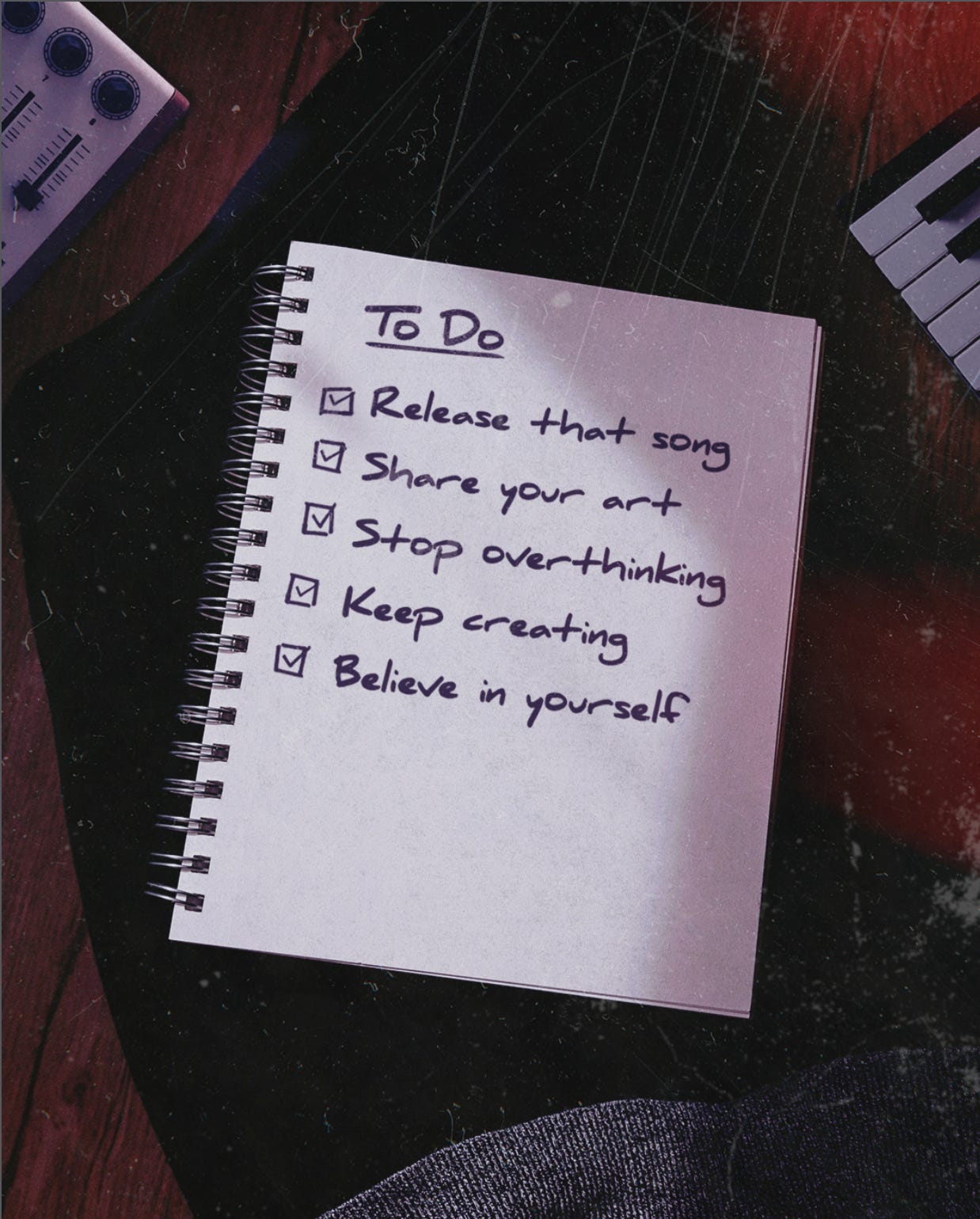
Leave a comment or respond to this email with your thoughts on these topics!
Great newsletter & curation Renee!
All the best from Berlin & keep on,
Jim
84% of songs entering the Billboard Global 200 went viral on TikTok first 🤯🤯🤯