Welcome to Your Monday Music Briefing - what caught my attention this week that felt important for self-label artists to know.
AI Is Starting to Figure Out Who Deserves to Get Paid
A new framework called “creative weight attribution” is gaining traction in AI licensing, basically, what happens to the artists whose music trained AI-generated music. When an AI generates a track, that output was shaped by millions of existing recordings it learned from. Attribution tech measures how much each source track actually influenced a specific AI output, so the original artists can be compensated accordingly. Startups like Musical AI have built tools that can parse what percentage of a generated output came from which source material, and major labels are already structuring licensing conversations around this model.
It’s worth noting that the U.S. Copyright Office has ruled that prompt-only AI generation doesn’t meet the threshold for copyright ownership. The person who typed the instruction didn’t make the creative decisions - the AI did. Which means the artists whose work trained the model have a stronger claim to what it produces than the person who generated it. Attribution tech is being built to make that compensation trackable and enforceable.
Sono Hikari take: This is the first real mechanism that could put money directly in artists' hands from AI - not just establish the legal right to be paid, but create an actual trackable path to payment. I still have a lot of questions: how deep does the attribution actually trace? If an AI output sounds like Bruno Mars, does it consider his influences too - Lenny Kravitz, Prince, Michael Jackson, Earth, Wind & Fire etc., or does it stop at the surface? And songwriters need to be in this conversation. Some writers create the melodic DNA that defines a song's identity without ever being the performing artist. If attribution tech only measures sonic similarity to recordings, it could miss the most influential element entirely. These are real limitations. But even imperfect attribution is better than the current system, which is nothing. If this works even partially as intended, your music could generate passive income every time it influences an AI output - without you doing anything.
For self-label artists: If an AI tool generated something that sounded like your music tomorrow, would your metadata be clean enough to get found and paid? What does your catalog documentation actually look like right now?
AI’s Most Critical Role in 2026 Isn’t Creation - It’s Rescue
Jacob Varghese, CEO of data company Noctil, wrote an op-ed for Music Business Association that reframes the entire AI debate. His argument: the real threat isn’t AI replacing artists. It’s that legacy rights management systems can’t handle the volume of new licensing revenue that AI deals are about to generate. The music industry is currently sitting on an estimated $2.5 billion in globally unclaimed royalties - money that was earned but never collected because of bad metadata, incorrect identifiers, and siloed databases. As AI licensing deals multiply, that number grows. Varghese’s solution: deploy AI not as a creator, but as a “rescue” tool, as specialized systems designed to clean databases, resolve metadata conflicts, and ensure payments actually reach the right people. He calls it “Janitorial AI.”
Sono Hikari take: Varghese is right, and the stakes are higher than most people realize. The industry isn't just behind on data; it's actively losing money because of it. Here's what a lot of artists don't know: when royalties sit unclaimed because the metadata can't match them to a rights holder, they don't just disappear. After the holding period expires, those unclaimed royalties that are sitting in the “black box” gets redistributed based on market share. Which means it flows to the biggest stakeholders. Major publishers. Major labels. Rarely independent aritsts. The global black box is estimated at $2.5 billion, and independent artists are the ones most likely to lose out because they're the least likely to have airtight registrations. This is exactly why "janitorial AI" is urgent. If the infrastructure can't identify who earned what, the system defaults to whoever already has the most power. Cleaning up the data is crucial to making sure money actually reaches the people who made it.
For self-label artists: Think about the last song you released. Are all your royalty streams actually flowing? When did you last verify your registrations with your PRO, publishing admin, and SoundExchange? Have you audited your metadata recently?
Spotify, Sony, Warner, and UMG Sue Anna’s Archive Over 86 Million Scraped Tracks
In December 2025, a shadow library called Anna’s Archive scraped approximately 300 terabytes of data from Spotify - metadata for 256 million tracks and audio files for 86 million songs. Spotify identified and disabled the accounts responsible almost immediately. Now Spotify, backed by all three major labels, is suing. The potential damages are calculated at nearly $13 trillion, based on the maximum statutory copyright penalty of $150,000 per track, applied to 86 million songs. A preliminary injunction was issued in January by a federal judge in New York. Anna’s Archive did not appear in court.
Sono Hikari take: Someone attempted to duplicate nearly the entire catalog of commercially released music in a single move. The industry responded within days - legally, forcefully, and with all three majors unified. For self-label artists, this is a useful reminder: your music has quantifiable value, and the legal infrastructure around protecting it is being actively enforced right now. This is also a preview of how seriously the AI training data question is being taken. When someone tries to scrape the library, the industry fights back.
For self-label artists: Are you registered with a distributor that would flag unauthorized use of your catalog? Do you actually know what protections are in place for your masters if someone tried to scrape them at scale?
Spotify Paid $11 Billion to the Music Industry in 2025 - And Is Cracking Down on AI Slop
Spotify announced it paid out more than $11 billion to the music industry in 2025 - up over 10% from 2024, and the largest single-year payout from any music retailer in history. Independent artists and labels accounted for half of all royalties. The platform now represents roughly 30% of all recorded music revenue. Spotify’s Head of Music, Charlie Hellman, also flagged something self-label artists should watch closely: AI-generated content is flooding the platform at scale, and Spotify is updating its verification systems, song credits, and artist identity protections to push back. Over 100,000 new tracks are uploaded to Spotify every single day.
Sono Hikari take: $11 billion sounds impressive until you divide it by the number of artists on the platform. And when a significant portion of those 100,000 daily uploads are AI-generated tracks designed to game the royalty pool, the math gets even less friendly for human artists. That dilution is real. The more promising signal is that Spotify is actually moving to protect against it; tightening verification, cleaning up credits, and flagging synthetic uploads. If those systems are built well, it could meaningfully protect your share of the pool. But it only helps you if your own profile, credits, and verification are already in order.
For self-label artists: Is your Spotify artist profile verified? Are your song credits accurate and complete on every track? In a landscape where AI is actively competing for the same royalty pool, your metadata and verification aren’t just housekeeping. They’re defense.
‘Mickey’ Gave ‘APT.’ It's Hook - So Why Aren’t the Original Songwriters Grammy Eligible?

Bruno Mars and Rosé’s “APT.” interpolated the chorus of Toni Basil’s 1982 hit “Mickey.” The songwriters behind “Mickey”, Mike Chapman and Nicky Chinn are credited on “APT..” They authorized the use, and they receive royalties. But they are not eligible for a Grammy nomination in Song of the Year. The Recording Academy’s rule is straightforward: Song of the Year honors new creative work from this year. Interpolated material, no matter how central to the song’s identity, doesn’t qualify the original writers for the nomination. Chapman and Chinn are two of 12 credited songwriters on “APT”, but only the ones who wrote new material are nominated. This isn’t a one-off. Multiple 2026 Song of the Year nominees contain interpolations, driven by the reality that short-form platforms reward familiar hooks that grab attention in under three seconds.
Sono Hikari take: The Grammy rule reveals something worth understanding about how the industry values songwriting. The people who created the hook that made “APT.” impossible to get out of your head can get the royalty check and the credits, but not the recognition on music’s biggest night. For self-label artists, the practical takeaway is this: interpolation is increasingly how hits get built, and if your songwriting catalog contains material worth borrowing, you need the infrastructure to license it properly, track when it’s being used, and ensure you’re compensated correctly. Your catalog has a shelf life longer than you think. The value doesn’t disappear when the original release stops charting.
For self-label artists: Have you thought about the long-term value of your songwriting catalog? If someone wanted to sample one of your compositions tomorrow, would you have the splits documented, the licensing infrastructure in place, and a way to track and approve usage?
If You Missed It:
One Thing To Carry With You This Week:
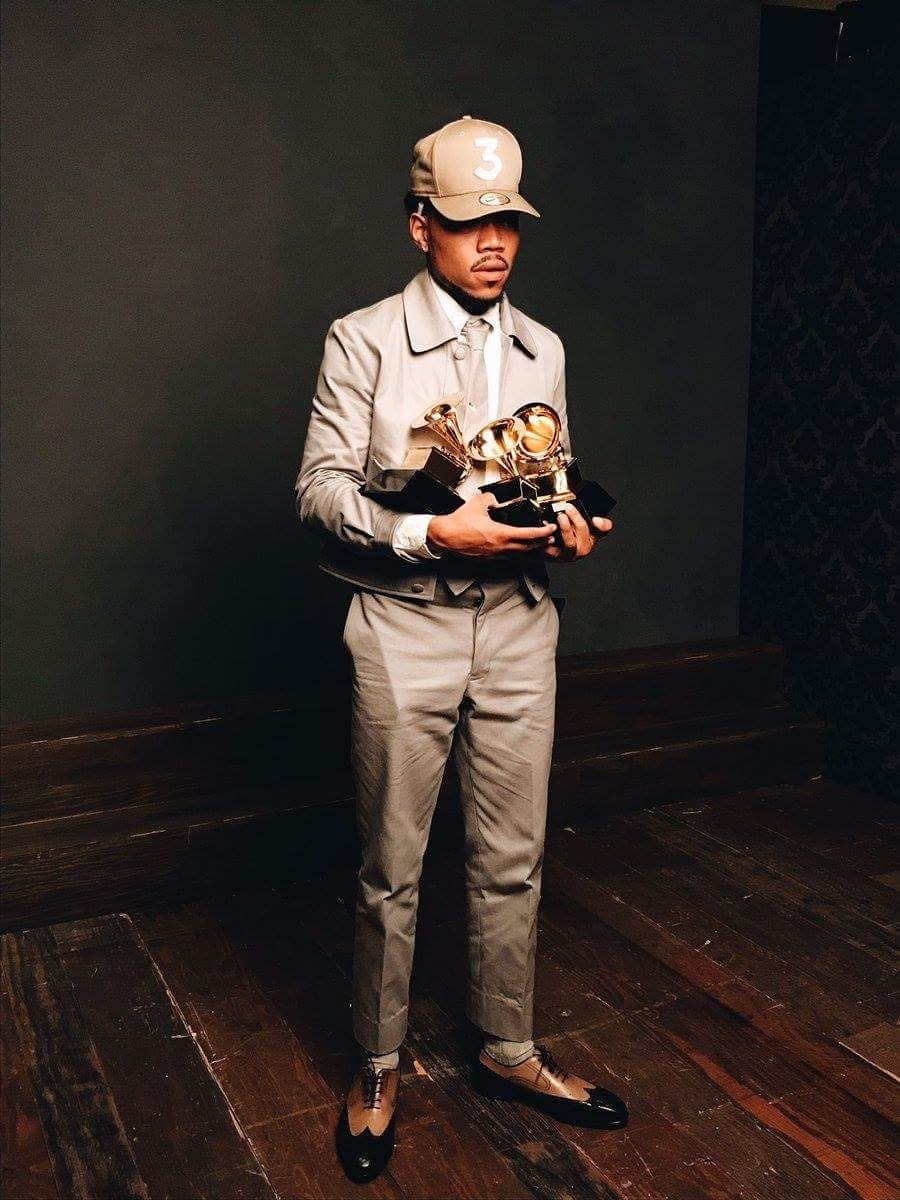
“I know people think independence means you do it by yourself, but independence means freedom.” - Chance the Rapper (@The Grammys)