


Here is a pop quiz that stumps even the pros:
“Which three countries top the global recorded-music market?”
Everyone nails #1, the U.S., but nearly everyone stumbles on #2. Most guess the U.K. or Germany. I still get double-takes, even from seasoned execs, every time I reveal the real answer.
“Wait, Japan is #2, ahead of Germany, the UK, even China? How?
As a Japanese kid growing up in New York in the early 2000s, my brother and I would bring back a bunch of popular Japanese albums from our summers in Japan. I repeatedly sang along to Utada Hikaru’s mega hit, “Automatic” in my bedroom, totally unaware that Japan’s music market ranked so high.
My curiosity about Japan’s music market never faded. Now, as an A&R building bridges between Japan and the U.S., I want to share the fundamental differences between the two worlds.
And, “How?” is a fair question - so lets dive in.
A Quick Time-Hop: From Post-War Jazz Bars to Global Streaming Playlists
When Japan rebuilt after World War II, it reconstructed more than skyscrapers; it rebuilt its soundtrack. Jazz clubs popped up next to noodle counters. By the 1980s and 1990s, J-Pop and the silky style called “City Pop” dominated the radio. Fast-forward to 2025, and much of that music is finding new life on TikTok and Spotify vaporwave playlists.
Japan is for Nostalgia Lovers
Here is a heart-warming piece of data for any of us who are suckers for nostalgia: 62.5 percent of Japan’s music revenue still comes from CDs1, in a world where streaming claims about 70 percent of the pie almost everywhere else.
It all comes down to fan-first culture, “oshikatsu,” or pushing your favorite artist. This cultural phenomenon generates an estimated ¥3.5 trillion ($18.8 billion) annually across all entertainment sectors, with 62.1% of Gen Z participating and spending an average of ¥250,000 ($1,300) yearly on their chosen artist2 on the following:
Collectibiles
Japanese CDs arrive like coffee-table art books: hardcover booklets, obi strips, lyric cards on textured stock, even Japan-exclusive tracks. A CD becomes merch you can shelve, show off, and resell. When was the last time you bought an album just to admire the packaging?
Fan-access perks
Slip one ticket out of the shrink-wrap and you earn a handshake, hi-touch, or quick Polaroid with the artist. Each ticket grants mere seconds of face time, so die-hards buy stacks of the same single to stretch the moment. What would a guaranteed selfie with your idol be worth to you?

Idol “vote” ballots
J-Pop idol groups like AKB48 tuck one-time codes into limited edition CDs. Each code equals one ballot in an annual ranking that decides which member sings lead. The more discs you buy, the louder your voice. In the U.S., the closest comparison is the heyday of boy bands and girl groups. Japan feels caught in that time capsule. Imagine it’s the early 2000s and every CD you purchase nudges your favorite Backstreet Boy or Spice Girl closer to center stage. How many would end up in your cart?
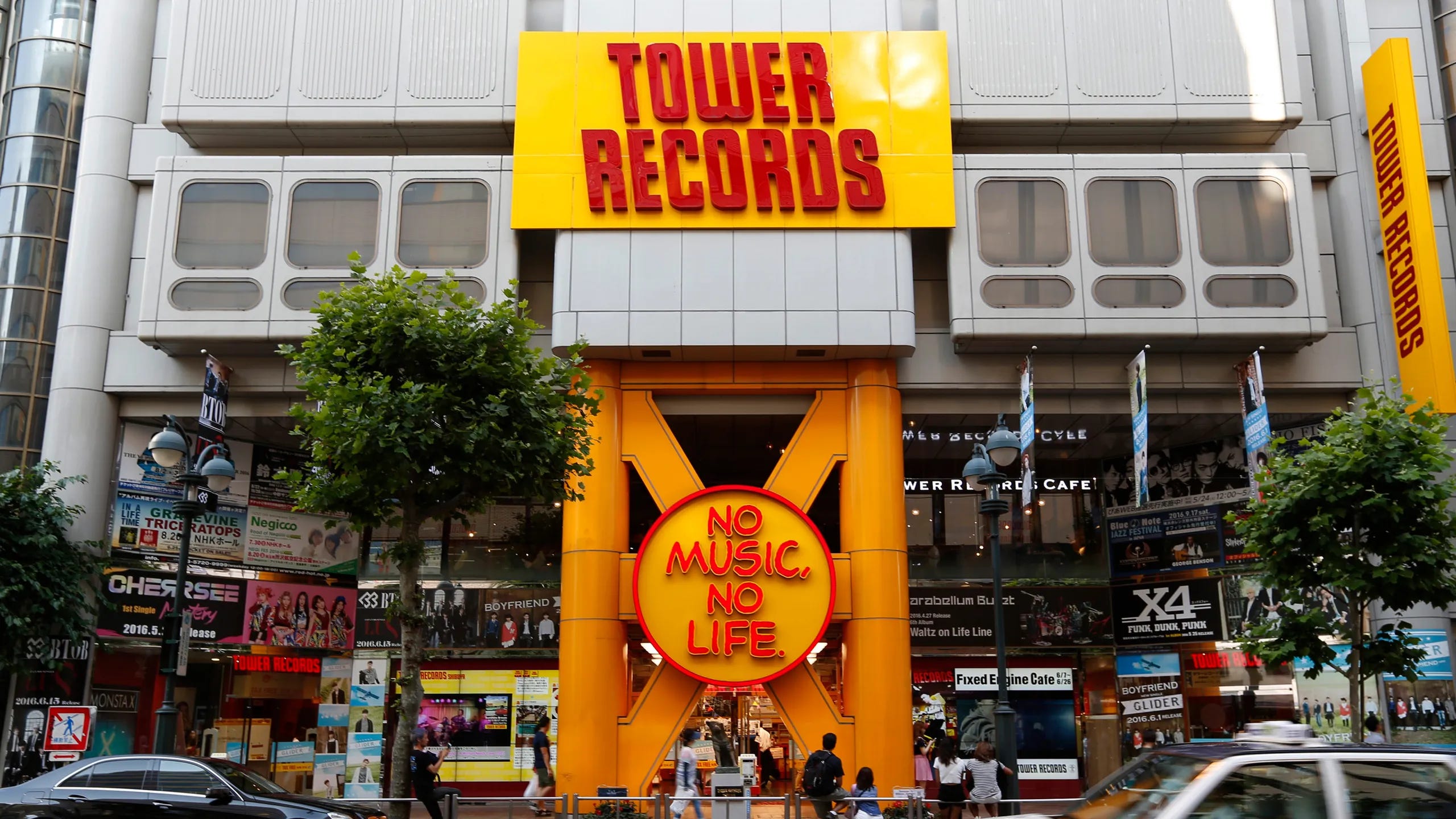
And here’s the part I love most: in Japan, buying music still feels like an event. Tower Records may have vanished from the U.S., but in Japan it’s alive and kicking, with more than 85 locations. Walk into the nine-story Shibuya flagship and you’ll find listening booths, a tiny live stage, and even a themed café - basically a sanctuary for music nerds. It turns a simple purchase into a day out, not just a swipe of the card.
The Digital Shift: From Caution to Catch-Up
For years, major Japanese labels prioritized guarding their lucrative CD machine, instead of exploring DSPs like Spotify and Apple Music like the rest of the world. Streaming arrived late and climbed slowly, but the tide has finally turned. Now, roughly half of Japanese artists’ Spotify royalties come from outside Japan. Anime scores, Vocaloid hits, and City Pop classics lure listeners far beyond the domestic market, proving that tradition and technology can coexist.
In my previous post, I explained how Music Awards Japan is reinventing award-show culture while carving out a global lane for Japanese music. The creation of CEIPA, the Culture and Entertainment Industry Promotion Association, sprang from this same digital shift, pushing the industry to look beyond domestic physical sales toward international growth.
Japan’s Talent Agency Blueprint
Japan’s talent agencies are a breed of their own. They train singers from childhood, shape every detail of their image, and lock in 360-degree deals that capture concert, merch, television, and brand-endorsement money in one pipeline. This system is notorious for restricting artists, but that early investment has produced countless debut-ready idols who sell big from day one, with built-in “fan games” such as rankings, handshake perks, and limited editions fueling super-fandom. The cash flow spreads across many agency-managed acts, and Japan’s overall music revenue remains high and steady.
I have lived in both cultures and keep asking myself whether this model thrives in Japan because of its cultural wiring. In the U.S., creative life revolves around free speech and artistic autonomy. Open debate and challenging authority are widely encouraged and even celebrated. Japan technically allows the same freedom, yet its strong focus on social harmony and the cultural ideal of ‘Gaman’ - enduring difficulties without complaint, means that speaking out can feel risky. Many who voice bold or controversial opinions face harsh pushback and online harassment, and some are even forced by their agencies to apologize on social media. That expectation of ‘quiet endurance’ makes others think twice before speaking up.
As an artist, where would you draw the line between creative freedom and the promise of a fast, profitable launchpad?
Streamlined Royalty System
Japan’s royalty landscape is remarkably simple. JASRAC controls about 98 percent of all copyrights3, collecting performance fees from bars, salons, karaoke rooms, and even music schools, so almost no revenue slips through the cracks. With a single database and one blanket license covering most performance, mechanical, and sync uses, the system avoids the “too many cooks” problem we face in the U.S., where BMI, ASCAP, SESAC, GMR, and others split the pie. And that’s before we even get to the unclaimed royalties saga, or the mystery of “lost payments.” Japan’s efficiency in the royalty system is a big reason Japan’s music revenue remains consistently strong year after year.
Tradition Meets Tomorrow: Where Do We Go Next?
Japan’s market is huge but oddly self-contained. Domestic artists still dominate local charts, yet the world is more open than ever to Japanese content, from anime soundtracks to Vocaloid hits and City Pop remixes.
So what if we tried a ‘Nu-Tradition’ strategy?
Niche Collabs: What would happen if a Tokyo City Pop guitarist teamed with a Brooklyn neo-soul vocalist? Would the blend crash Spotify’s Fresh Finds or launch an entirely new micro-genre?
Crypto Pay + Premium CD Bundles: Picture a deluxe, art-packed Japanese CD you can buy from anywhere and pay for with one quick digital-cash click. Could that mix of easy crypto payment and collectible packaging pull more overseas fans into Japan’s stores and let U.S. artists reach more Japanese listeners?
IRL + Metaverse Fan Events: How might “oshikatsu” culture translate to virtual meet-and-greets in the gaming world like Fortnite, for overseas fans who cannot hop a flight to Japan?
Competing on a Global Stage
Japan’s global presence is not just about market size. It rests on devoted fan culture, unique industry structures, and a steady digital transformation that keeps it a captivating force.
What about Japan’s approach surprises you most, and where do you see the next big opportunity?
Also, next time you are chatting with a music-biz insider, ask them,
“Which three countries top the global recorded-music market?”
Let me know how it goes!
IFPI Global Music Report 2025. Music Business Worldwide. (March 19, 2025). https://www.musicbusinessworldwide.com/global-recorded-music-revenues-hit-29-6bn-in-2024-up-4-8-yoy-users-of-paid-music-subscriptions-reach-752m/
Manamina Magazine (VALUES Inc.) and The Conversation (2024). https://theconversation.com/oshikatsu-the-fandom-phenomenon-japan-hopes-can-boost-its-flagging-economy-253853
"Japanese copyright group under fire." UPI.com. (February 8, 2009). https://www.upi.com/Entertainment_News/2009/02/08/Japanese-copyright-group-under-fire/81011234113494/
the US needs a JSRAC 🫠