


The hype for the last few weeks has been about how the major labels did a complete 180 with AI companies.
The whiplash is real. Just over a year ago, Universal, Warner, and Sony sued AI music companies like Udio and Suno for “mass infringement” on an “almost unimaginable scale,”1 accusing them of training on millions of copyrighted songs without permission.
Fast forward to late 2024: Universal settled with Udio and announced a joint AI music platform launching in 2026. Warner followed weeks later, partnering with Suno and acquiring concert platform Songkick. The new model? An even heightened emphasis on licensed training data, artist opt-in, and revenue sharing. Songs live in a “walled garden” where fans can remix and play with music, but can’t export tracks to compete on streaming services.2
From lawsuits to partnership in twelve months. It’s a fascinating 180 that reveals a truth that I think many of us have already known: the majors only move where the money goes. This was never about the majors actually caring about their artists or whether AI belongs in music (let’s face it - it’s inevitable). It’s about who controls it and who profits from it.
In the midst of all this noise, I want to share something hopeful. From talking to peers, artists, and industry people, I’ve noticed this conversation creates fear, isolation, and an almost cynical view of the future. Maybe you’re feeling it too. But here are two artists who have used AI as a genuine artistic choice, asking profound questions about identity, time, and what it means to create.
Imogen Heap: “Anyone Who Has Spent 10,000 Hours Perfecting Their Craft Will Always Have an Edge”
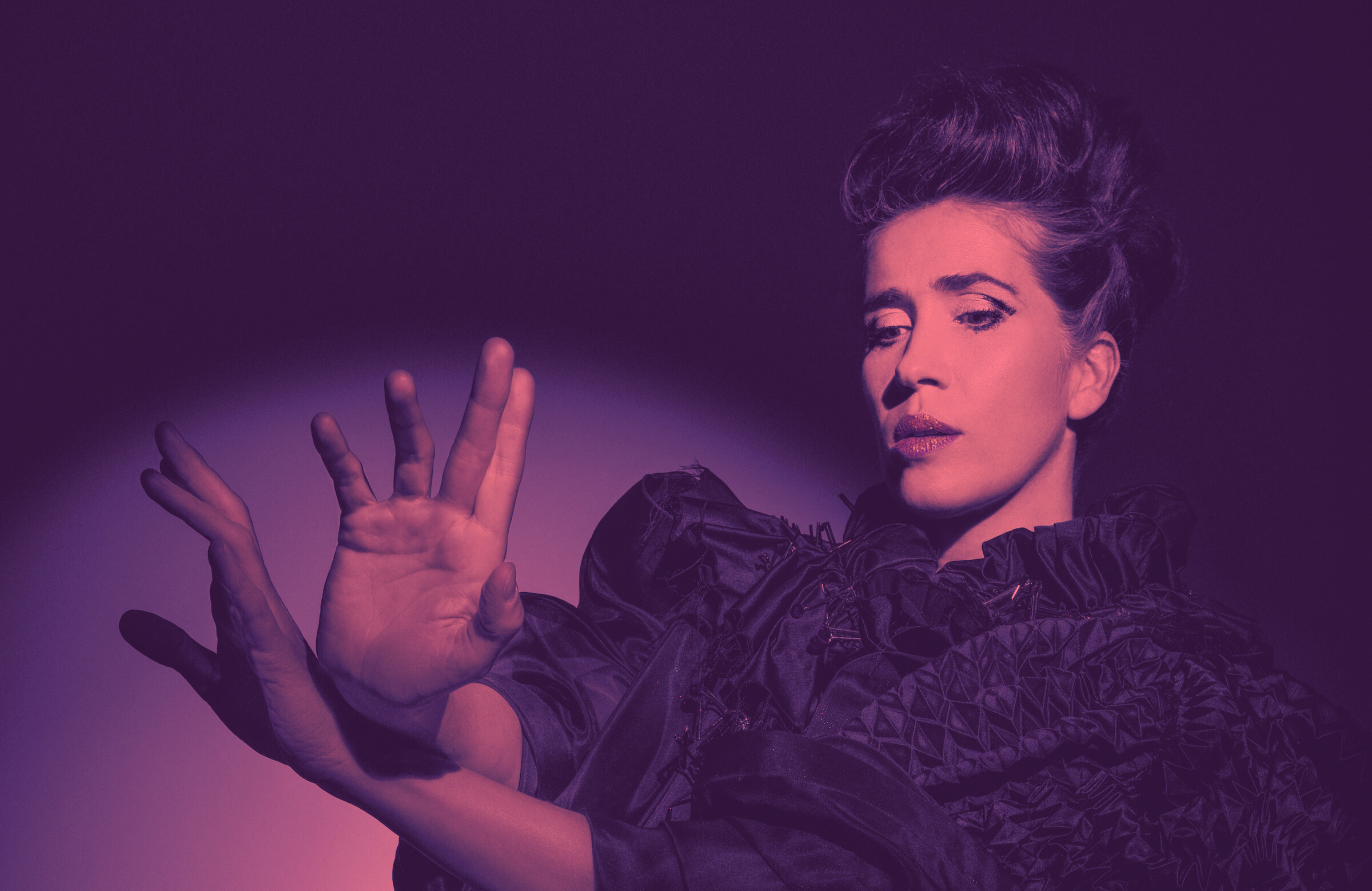
Imogen Heap has never been one to shy away from technology. The British singer-songwriter and producer has spent 25 years pushing creative boundaries - from her MI.MU gloves that turn hand gestures into music, to her work with blockchain for music rights. She’s always been challenging the industry, which I’m personally always inspired by.
This year, Heap released “I AM___,” a 13-minute odyssey that features her duetting with AI.Mogen, an AI model of her own voice that she trained herself. She sang every single part herself, then ran her vocals through her AI model so the model of her voice performed the words triggered, like playing samples on a MIDI keyboard. This new release deliberately blurs the line between human and artificial, forcing listeners to confront an uncomfortable question: if we can’t tell the difference, does it matter?
“I wanted to trick people,” Heap told Billboard. After a traumatic noise section in the song representing the annihilation of ego, the AI voice enters, and she wanted listeners to feel something from that voice, even knowing it wasn’t technically “her”. (Fair warning: I definitely had a mini panic attack at moments, but the release was truly beautiful, and it felt like being immersed in a film.)
The song title says it all: AI.Mogen is clearly labeled. Everything was ethically sourced using only her own voice with no generated AI music or AI prompts. It’s transparency meeting artistry to open up a conversation about how AI can exist in music without exploitation.
When asked about major labels signing AI artists, Heap’s response cuts through the hype with blunt honesty: “I feel a lot of major labels are signing music that sounds AI-generated to me anyway, it’s just like, ‘oh, that just sounds like that last thing and that last thing’ - nothing’s changed. So, it wouldn’t surprise me. Wherever there’s money, obviously, they’ll go if they think they can make money out of this artist.”
She has a point.
For me, the biggest takeaway from her recent interview with Billboard is about artistic craft and authenticity. As Heap puts it, anyone who has spent 10,000 hours perfecting their craft will always have an edge, that danger. If you just generate something off these services with prompts, you’ll sound like 99% of other people who did that too. And if that’s your thing, by all means, go for it.
But real artistry comes from having something genuine to say. Using AI as just one tool among many to express it shouldn’t diminish your artistic value.
Heap is also working on solutions beyond just her own music. Through her company Auracles and a recent partnership with SoundCloud, she’s developing a verified digital ID system for musicians to track music usage across the internet, grant permissions, and ensure artists maintain control in an age where their voices can be replicated with frightening ease.
Yumi Matsutoya: A Conversation Across Time

Now let me take you to my native country, Japan, where one of the country’s most iconic artists is asking even deeper questions about AI, identity, and time itself.
If you’re unfamiliar with Yumi Matsutoya (also known as “Yuming”), imagine a singer-songwriter with Carole King’s lyrical impact, Kate Bush’s unconventional voice, theatrical vision, and a drive to push boundaries with technology and production. She essentially defined what we now know of as “City Pop”, that dreamy, sophisticated sound of 1970s-80s Japanese urban romance.
At 71, Matsutoya just released her 40th studio album, “Wormhole,” and it’s a stunning meditation on memory, time, and self, explored by AI technology.
Several years ago, researchers from the University of Tokyo (Japan’s Harvard or MIT) approached her with a proposal: could they reconstruct her voice as it sounded in the early 1970s during her breakthrough years? And what if she could sing with her younger self? That younger and innocent voice, smoother, higher, full of the wonder that made her the queen of city pop.
Engineers used ‘Dreamtonics’ Synthesizer V software to create “Yumi AraI”, what they call a “third voice”. This ghostly vocal presence was used as an artist's choice to weave through her album, creating a conversation with her past self.
As Matsutoya explained in her recent interview with The Japan Times:
“It’s the me of now and the ‘me’ of the past communicating with one another. Every song contains memories or imagines another dimension. There’s a lot of ‘what if?’”
Matsutoya said facing AI head-on taught her a lot, making her ask fundamental questions: “Who am I? What is time?” She confronted philosophical ideas she hadn’t thought about before.
In an industry obsessed with youth and novelty, here’s a 71-year-old artist using AI not to sound younger, but to explore what it means for one, especially an artist to age. The album title “Wormhole” is intentional. For Matsutoya, wormholes are those moments when our consciousness travels through memories, images, and dreams. The album explores what she calls “wormhole phenomena,” connecting the her of now with the her of the past.
Two Sides of AI Ethics
Both Heap and Matsutoya demonstrate something crucial: AI ethics isn’t just about training data, though that matters enormously. It’s obviously wrong for companies to scrape artists’ voices for free, learning in seconds what took artists years of work and living through the ups and downs of life to develop. But ethics also depends on how AI gets used. As a shortcut to flood the market with content? Or as a tool for genuine artistic exploration?
The licensing deals address one side of the problem, and we absolutely need to keep fighting for fair compensation and artist consent. But here’s the reality: AI isn’t going away. It’s already here, and it’s only getting more sophisticated.
The licensing deals can’t answer the question of artistic intention. Only we can. So while we fight those necessary battles over training data and compensation, maybe it’s productive for our own sake to simultaneously develop a healthier perspective about how AI tools, especially AI voices and AI music creation, can be used to express ourselves.
Matsutoya’s parting advice feels particularly crucial for this moment:
“Have a strong sense of self, both physically and mentally. If you know who you are, you can use technology efficiently to refine yourself. But you must have a strong core, especially in a future where a ‘copy’ of you might be possible. You have to know who you are.”
She continues:
“Hold fast to who you are. In the streaming era, a song someone discovers today is ‘new’ to them, regardless of trends. Don’t chase trends. Play counts can be surprisingly big, but they’re just numbers. Build a community that truly understands you.”
Turning Threat Into Inspiration
What keeps me up at night as someone who straddles both worlds - the creative side as a producer and the business side as an artist manager/A&R: how all of this affects independent artists. Major labels just partnered with the companies they accused of theft, securing opt-in rights and compensation for their rosters. But what about everyone else?
There are a lot of unknowns at the moment, but I believe being an independent artist is more powerful now than ever. You don’t report to anyone, and you choose your own path. As long as you’re driven, stay curious, and have the right people in your corner making smart decisions with you, you can build a sustainable career. You don’t need a big team to reach your goals.
The support major label artists get can be powerful and limiting at the same time. So many are held hostage creatively, with labels refusing to release their music or put money behind it. And now with AI, if artists opt out, will labels treat them differently? Prioritize them less? No one’s worried about the Beyoncés and Taylor Swifts. It’s the emerging artists stuck in those contracts who I personally feel for.
If you’re an independent artist reading this, you should be proud. You have something major label artists don’t: complete control over how you engage with this technology for your craft.
The music industry has been here before. Recording technology, synthesizers, sampling, streaming - each time, we face the possibility of artistic doom. And each time, artists found a way to turn threat into inspiration.
The real artists, the ones with something genuine to say, will always stand out. The corporate deals matter, but artists like Heap and Matsutoya are already showing us what’s actually possible when you lead with intention instead of fear.
What do you think? How are you using AI technology for your art? What are your biggest concerns as an artist or manager? Drop your thoughts in the comments - I’d love to hear what you’re wrestling with on this.
I'm really appreciating your articles and perspective on the music industry - thank you Renee!
Thanks for writing this, it clarifies a lot! The 180 is wild. I'm really curious about that 'walled garden' model – how will they tehnically prevent tracks from competing on streaming services?