


Something remarkable just happened in Japan’s music industry. For the first time, five key organizations, traditionally distant from each other, have united with a shared vision: to expand their presence in the global music market.
Music Awards Japan (MAJ) is Japan’s bold move to the global spotlight - an award show like no other, backed by a historic industry alliance and over $1 billion in global support. With real-time fan data and a focus on transparency, MAJ isn’t just honoring music - it’s rewriting the rules. The goal? To bring Japanese music to the world stage and shape a new future for how artists are seen, heard, and celebrated.
The Moment Everything Changed
COVID-19 didn't just pause concerts - it shattered Japan's entire music ecosystem. Suddenly, the world's second-largest music market found itself staring at a brutal reality: its domestic-focused model was dying.
The response? CEIPA (Japan Culture and Entertainment Industry Promotion Association) emerged in December 2023, uniting five industry titans who had never collaborated before:
Recording Industry Association of Japan (RIAJ): The certification authority (think Japan's version of RIAA)
Japan Association of Music Enterprises (JAME): Business operations and management
Federation of Music Producers Japan (FMPJ): Artist production and rights
Music Publishers Association of Japan (MPAJ): Music publishing powerhouse
All Japan Concert & Live Entertainment Promoters’ Conference (ACPC): Live entertainment orchestrators
1When Tatsuya Nomura, CEIPA board member and President of FMPJ, explained their motivation, he was direct: "Japan was all about selling CDs... but when COVID hit, music fans could not go to record shops. How do they make a profit? They have to think bigger, outside of Japan."
Yes, CDs. I know. Over here in the US, we can’t even find a CD player to play one.
Enter MAJ: Japan's Answer to the Grammys
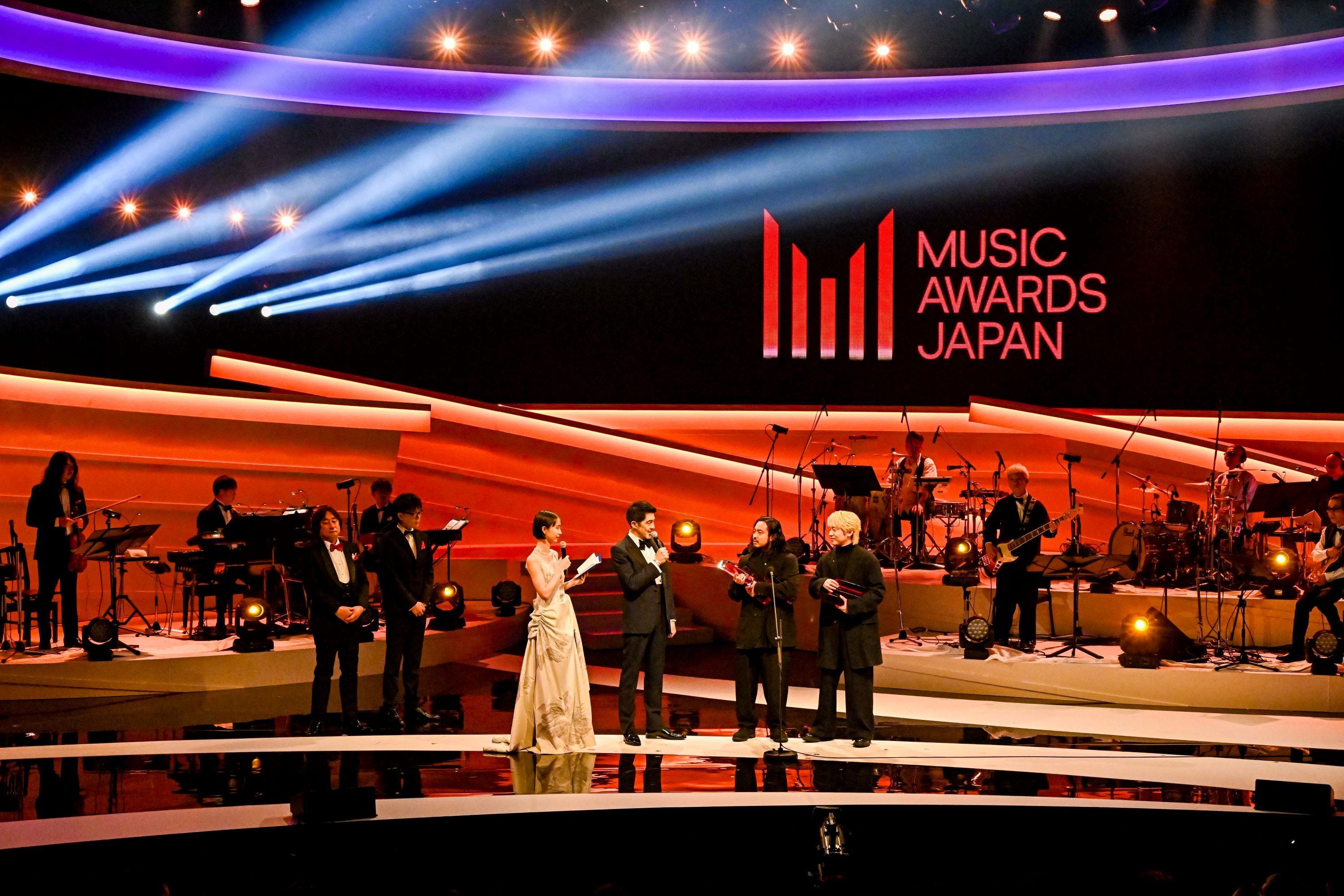
Music Awards Japan (MAJ) debuted this month at Kyoto's ROHM Theatre, representing Japan's first serious attempt at creating Grammy-level global influence.
The numbers tell the story:
62 award categories spanning everything from J-pop to Vocaloid culture
Domestic categories were dominated by artists such as Creepy Nuts, Fuji Kaze, Mrs. GREEN APPLE, and YOASOBI.
International categories recognized artists like Megan Thee Stallion, Kendrick Lamar, Rosé and Bruno Mars, Taylor Swift, Lady Gaga, Billie Eilish, and Ariana Grande.
5,000 music industry professionals voting globally
YouTube global streaming
$1+ billion backing through partnerships like the MUSIC WAY PROJECT with Toyota
But here's what makes MAJ revolutionary: it's solving the Grammy problem.
The Grammys operate as an exclusive members-only club; only Recording Academy members can nominate and vote, creating a system where industry politics often matter more than actual impact. You have to clear membership hurdles (12 professional credits, member recommendation, annual fee, etc.) , then lobby within a closed circle of thousands of peers who may never have heard your music.
Music Awards Japan flips this entirely.
Stage One: An automated system pulls contenders directly from hard data from charts, streaming numbers, and real audience engagement. No backroom deals, no lobbying. The numbers don't lie.
Stage Two: Winners are chosen by 5,000 international industry professionals spanning continents and roles such as artists, songwriters, producers and engineers, concert promoters, music-video directors, critics, distributors, managers, major and indie affiliated professionals, rotating on an event basis. Which means, unlike the Grammys, the voting committee is constantly refreshed to keep the awards fair and current. For Fan-voted categories, 100% of the Fan Votes via Spotify determines the winner.
The result? Real audiences and global experts share the final word, while data ensures the best music rises to the top regardless of industry connections.
It's transparency meets democracy - a direct challenge to the industry’s notorious gatekeeping tendencies.
The Infrastructure Play
Beyond the awards ceremony itself, CEIPA is building something equally important: global infrastructure.
They're establishing permanent bases in Los Angeles, London, and Thailand. They've partnered with Goldenvoice (the team behind Coachella). They're systematically placing Japanese artists at major international festivals.
The Matsuri '25 showcase in Los Angeles sold out instantly. YOASOBI, Ado, and ATARASHII GAKKO! proved that American audiences are hungry for Japanese music beyond anime soundtracks.
Why This Matters
Here's where it gets interesting for someone like me, running a boutique Artist Service company with a focus on creating a bridge between the US and Japan for labels and Artists:
For Artists: Japan now seems to have systematic support for artists to build truly global careers, rather than international success being out of reach or an afterthought.
For Industry Professionals: There's finally a coordinated system instead of hoping for viral moments or anime tie-ins.
For Music Fans: International fans outside of Japan will have a chance to discover a lot of music that was previously trapped in the Japanese market.
For Investors: 2Japan's content industry aims to grow from $47 billion to $200 billion by 2033. Someone's going to capture that value.
Lingering Questions
The real anticipation lies not in the answers we hold, but in the questions that remain. So many scenarios are still unfolding.
Will MAJ become globally influential within five years, or will it remain regionally significant? The Grammy comparison is ambitious, but CEIPA has something the Grammys don't: a unified industry approach and government backing. How effective will the Japanese government be in supporting its initiative? And how important is this initiative for the Japanese government?
How will this affect K-pop's global dominance? Japan's systematic approach could challenge Korea's cultural export model, especially with superior financial backing. However, J-pop is a different genre altogether. Is that enough for it to claim its own lane? Can we expect the international crowd to differentiate the two genres?
What will it take for MAJ to carve out a lasting place in the global awards ecosystem, or will Western recognition remain limited to institutions like the Grammys? The question may not just be about what Japan does, but whether the U.S. and Europe are ready to expand their definition of prestige. (Try searching for news about MAJ. You’ll find just a single Billboard article.)
What happens when streaming platforms start prioritizing MAJ-certified music? Spotify and Apple Music are already partners. Can we expect algorithmic preference?
What role do award shows really play in today’s music industry, and do they still matter to audiences? In recent years, we’ve seen a noticeable decline in consumer interest in the culture surrounding award shows, particularly among younger generations. What does this shift mean for the industry at large, and can MAJ’s blueprint for a more transparent and democratic music culture resonate with the rest of the world?
The Opportunity in Front of Us
If you're reading this, you probably already sense what's happening. Japan's music industry has shifted from protecting its domestic market to actively pursuing global connections, and it's demanding attention from the rest of the world.
For those of us who are involved in both markets, this represents something special: a genuine opportunity to be part of building those bridges.
As someone born in Japan and raised in the US, watching this transformation feels deeply personal. For too long, these felt like two separate worlds - the country that shaped my roots and the one that became my home. From middle school through high school, I was secretly writing and recording songs on GarageBand, too embarrassed to share them, because I rarely saw anyone who looked like me making waves in mainstream American music.
That's changing now, and it's happening at the industry level, not just through individual breakthroughs. There's something powerful about music finally living up to its promise of being truly universal, connecting cultures instead of keeping them separate.
Popular Japanese music is poised to go global - it’s only a matter of time and who will help lead the charge.
Let's Connect and Shape This Together
I'm fascinated by what's unfolding here, and I'd love to connect with you if you see the same opportunity. Whether you're an artist dreaming of breaking into the Japanese market, a music professional spotting new possibilities, or someone who simply gets excited about cultural bridges through music, I want to hear your story.
What's your take on this transformation?
The infrastructure is being built. The awards are being planned. The showcases are selling out.
But the most interesting conversations are happening between people who understand that we're witnessing something special. People who have insights, stories, and ideas about how to make the most of this moment.
I'm here for those conversations. Let's share what we're seeing, what we're learning, and how we might move the needle together.
What questions are you asking about MAJ and Japan's global music push? What opportunities do you see that others might be missing?
Source: The Hollywood Reporter, "CEIPA Board Member Tatsuya Nomura on J-Pop's Global Rise," April 2025
Source: Vinyl Me Please, "Music Awards Japan: A New Era for Japanese Music Industry Globalization," May 2025.
Algorithmic preference would be huge!