Welcome to Your Monday Music Briefing, your weekly roundup of what caught my attention last week that felt important for self-label artists to know.
Korea’s Music Giants Target Japan as Paid Streaming Scales Up

Japan’s premium music streaming surged by 14.2 billion plays last year. At the 2026 Korea Music Data Summit, executives from HYBE, SM, JYP, and YG met with analytics firm Luminate to map a data-driven expansion strategy into Japan’s growing paid streaming market. Industry leaders emphasized that intuition-based strategies are no longer enough, pointing to localized release timing, platform prioritization, and fan-to-revenue conversion as the new playbook.
Sono Hikari take: Japan continues to operate as one of the most unique music markets in the world. It’s the second-largest music market in the world accounting for roughly one-third of all premium streams in Asia-Pacific, and still generating massive revenue from physical sales. What stands out here is the shift toward data-driven strategy. These Korean labels are treating Japan as a market that requires precision, localization, and a deep understanding of consumer behavior. That level of intentionality is something self-label artists can learn from, regardless of scale.
For self-label artists: You don’t need a team of analysts to start thinking strategically about where your listeners are. Check your streaming data. Which countries or cities are showing growth? Are you tailoring anything to those audiences, even something as small as release timing or playlist pitching strategy? The labels going into Japan aren’t guessing anymore. Neither should you.
Songs Are Reaching 1 Billion Spotify Streams 14x Faster Than a Decade Ago

Chartmetric’s 2025 Year in Music report revealed that the average time for a song to reach one billion Spotify streams dropped from 2,729 days in 2015 to 197 days in 2025. In October 2023, BTS member Jungkook’s Seven broke the record for the fastest song to reach one billion Spotify streams at 108 days. Three times as many artists reached “Superstar” status in 2025, but sustaining that level of chart dominance is becoming harder. Regional genres like Bollywood, K-pop, Brazilian funk, and Reggaeton are among the fastest-growing sounds globally. South Korea now accounts for five times as many artists in the top 1,000 compared to 2020, and India’s share surged from 0.6% to 11%.
Sono Hikari take: The speed of consumption is accelerating, and so is the speed at which attention fades. More artists are breaking through than ever before, but staying power is shrinking. That paradox is worth sitting with. The report also highlights something important: regional genres and non-English-speaking markets are driving global growth. The music industry is becoming less centralized, and artists rooted in specific cultural identities are finding global audiences. The old model of needing to break through in the U.S. or UK first is losing its grip.
For self-label artists: If your music is rooted in a specific sound, culture, or region, that’s an asset. The data is proving that authenticity and cultural specificity travel further than ever. And if you’re worried about not hitting viral numbers, remember that the artists sustaining long careers are the ones building loyal audiences, not chasing the fastest billion-stream milestone.
Epidemic Sound Launches Global Artist Series Featuring Reworked Tracks From Catalogue
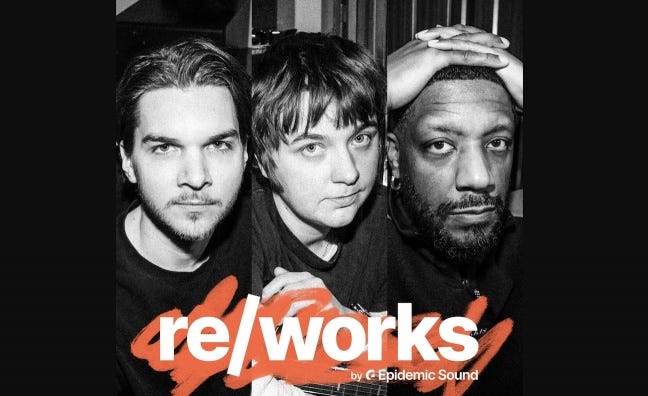
Epidemic Sound launched “re/works by Epidemic Sound,” a global series inviting artists to reimagine tracks from their catalogue of over 50,000 songs. The reworked tracks will live across streaming platforms, social media, and brand partnerships. The Swedish edition kicks off with artists like Kleerup and Jenny Wilson, with a UK edition planned for autumn. Their previous initiative, Extra Version, amassed over a billion views across YouTube and TikTok in six months.
Sono Hikari take: The re/works concept is smart. Inviting established artists to reimagine existing catalogue tracks gives those artists visibility across Epidemic Sound’s massive creator and brand network, and the numbers back it up. Their previous initiative, Extra Version, pulled over a billion views across YouTube and TikTok in six months. That’s real exposure. For producers and musicians who thrive on making mood-driven, sync-ready music, this kind of opportunity can generate meaningful income and connect their sound to audiences they might never reach on their own. Worth knowing before you dive in: Epidemic Sound owns 100% of the rights to every track in its catalogue, including masters, composition, and neighboring rights. Artists receive an upfront fee and a 50/50 streaming split, but the ownership is permanent. That model works well for musicians who want steady studio income creating vibe and atmosphere tracks for creators and brands. For artists focused on building a fanbase under their own name, the trade-off is worth understanding clearly before signing anything.
For self-label artists: Programs like this can be a solid revenue layer if you treat them as work-for-hire, separate from your artist project. The exposure is real, and the pay structure is transparent. Just go in with your eyes open. Know what you’re keeping and what you’re giving up. If ownership is your priority, protect your artist catalogue and use opportunities like this strategically on the side, not as the foundation of your career.
YouTube Rolls Out an AI Playlist Generator for Premium Users
YouTube now allows Premium users on iOS and Android to create playlists using text or voice prompts. Users can type something like “sad post-rock” or “90s classic hits,” and the AI builds a playlist. Spotify, Amazon Music, and Deezer have all rolled out similar features. YouTube also recently restricted free users from viewing song lyrics, pushing more features behind the Premium paywall. Google reported 325 million paying subscribers across Google One and YouTube Premium.
Sono Hikari take: AI-generated playlists are becoming the norm across every major platform. For listeners, it's convenient. For artists, it’s not so black and white. AI playlists could surface music that editorial playlists would never touch, expanding discovery for smaller artists. But if algorithms are doing the curating, the already-existing bias toward popular and familiar-sounding tracks could deepen. It's also worth noting that more platforms are locking lyrics behind premium paywalls. That move actually validates something artists have always known: listeners care about lyrics. If platforms see enough value in words to charge for access to them, that's even more incentive to be intentional with yours.
For self-label artists: As AI playlists become more common, your metadata matters more than ever. Genre tags, mood descriptors, and accurate song information all influence how algorithms categorize and surface your music. Make sure your distributor uploads are detailed and correct. And keep building direct connections with your fans outside of any platform. The algorithm changes constantly. Your email list and community don’t.
If You Missed It:
One Thing To Carry With You This Week:
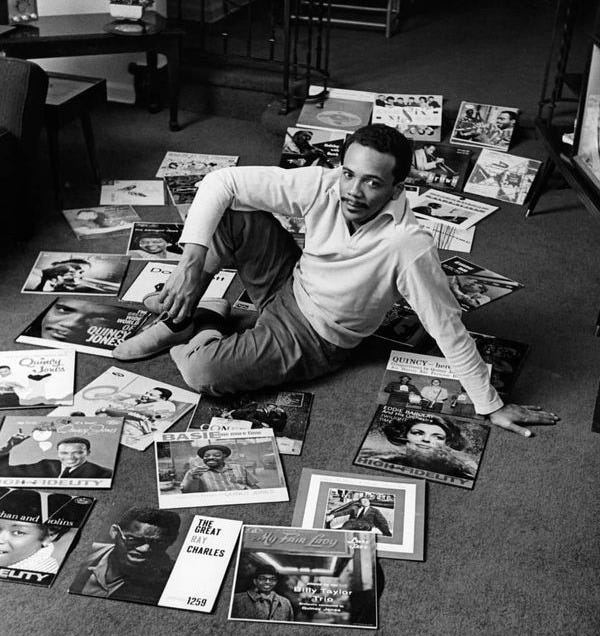
"Art is created in the present. The motivation for the creation can be commercial. But that art is limited in its power by its intentions."
— Quincy Jones